Tuesday, January 13, 2015

Thursday, June 28, 2012
Survival recipe: Buckaroo beans
Anyone with storage supplies of dried beans needs innovative ways to cook them. Here is a favorite starter recipe from the Central Oregon Dutch Oven Society.
 by Leon Pantenburg
People getting started in Dutch oven cooking are often somewhat intimidated when it comes to participating in a Dutch Oven Gathering or cookoff. One of the fool-proof recipes that is usually recommended to these folks is Buckaroo Beans. This recipe, from Amber Franks, and published in the Central Oregon Dutch Oven Cookbook, Volume One, makes use of several kinds of beans.
Dried or storage foods can easily be substituted for the fresh equivalents. Another nice aspect of this dish is that the beans can be cooked and simmered over a campfire in a Dutch oven.
Check out the recipe - you'll find yourself making it even when you don't need to prepare a meal under
survival circumstances!
Buckaroo Beans
1 lb ground beef
1 large onion, chopped
1/2 tsp garlic powder
1 tsp dry mustard
1/2 c ketchup
2 tsp vinegar
1 tsp Worcestershire sauce
1 tsp each of oregano, basil and dill
2 (14 oz) cans of kidney beans
1 (6 oz) can baby lima beans
1 (24 oz) can Boston style baked beans
In a 12-inch Dutch oven, brown hamburger with the chopped onion. Add seasonings and beans (undrained except for the lima beans). Mix together and add ketchup, vinegar and Worcestershire sauce. Cook at about 325 degrees for about one hour.
by Leon PantenburgPeople getting started in Dutch oven cooking are often somewhat intimidated when it comes to participating in a Dutch Oven Gathering or cookoff. One of the fool-proof recipes that is usually recommended to these folks is Buckaroo Beans. This recipe, from Amber Franks, and published in the Central Oregon Dutch Oven Cookbook, Volume One, makes use of several kinds of beans.
Dried or storage foods can easily be substituted for the fresh equivalents. Another nice aspect of this dish is that the beans can be cooked and simmered over a campfire in a Dutch oven.
Check out the recipe - you'll find yourself making it even when you don't need to prepare a meal under
survival circumstances!
Buckaroo Beans
1 lb ground beef
1 large onion, chopped
1/2 tsp garlic powder
1 tsp dry mustard
1/2 c ketchup
 |
| Visit our store! |
2 tsp vinegar
1 tsp Worcestershire sauce
1 tsp each of oregano, basil and dill
2 (14 oz) cans of kidney beans
1 (6 oz) can baby lima beans
1 (24 oz) can Boston style baked beans
In a 12-inch Dutch oven, brown hamburger with the chopped onion. Add seasonings and beans (undrained except for the lima beans). Mix together and add ketchup, vinegar and Worcestershire sauce. Cook at about 325 degrees for about one hour.
Tuesday, June 26, 2012
Gear Review: Boy Scout Hot Spark survival fire starter
The best survival gear doesn't have to be expensive. But it must be reliable and able to work under extreme conditions. One of the best ferrocerium rods for firemaking is the Boy Scout Hot Spark.
by Leon Pantenburg
I like stuff that works. Some of these items include my Cold Steel SRK survival knife, Ruger 10/22, a Swiss Army Classic keychain knife, my Gerber folding saw and a 42-ounce enamelware cup. Included in this list is a Boy Scout Hot Spark ferrocerium rod.
Because of its reliability, a Hot Spark is included in my keyring and Altoid tin survival kits. Backup ferro rods are also scattered throughout my gear. They don't weigh anything, or take up any space, and the ferro rod firemaking technique, properly done is utterly reliable. (Check out the ferro rod firemaking video!)
The Boy Scout Hot Spark on my keyring survival kit costs about three dollars at any scout store. It has a good handle and the ferro rod is very effective. Because it is easily included and convenient, it will be taken along.
Here's why I carry a ferro rod:
|
| Visit our store! |
by Leon Pantenburg
I like stuff that works. Some of these items include my Cold Steel SRK survival knife, Ruger 10/22, a Swiss Army Classic keychain knife, my Gerber folding saw and a 42-ounce enamelware cup. Included in this list is a Boy Scout Hot Spark ferrocerium rod.
Because of its reliability, a Hot Spark is included in my keyring and Altoid tin survival kits. Backup ferro rods are also scattered throughout my gear. They don't weigh anything, or take up any space, and the ferro rod firemaking technique, properly done is utterly reliable. (Check out the ferro rod firemaking video!)
The Boy Scout Hot Spark on my keyring survival kit costs about three dollars at any scout store. It has a good handle and the ferro rod is very effective. Because it is easily included and convenient, it will be taken along.
Here's why I carry a ferro rod:
- Extreme reliability: A ferrocerium rod, when scraped with a hardened steel striker, will produce sparks with temperatures of up to 5,500 degrees. These sparks will readily ignite many forms of tinder. (Check out the video on finding tinder under survival conditions) A ferro rod is also good for hundreds, if not thousands of fires. Matches, lighters and many other methods are finite.
- Compact and easy to carry: That means you can carry several as backups.
- Work under conditions that would disable other firemaking methods: This is one of the
most important reasons to carry a ferro rod. Butane lighters are easily disabled by cold and moisture or a grain of sand. Matches are unreliable and degenerate over time. Every firemaking method has some disadvantage, but I believe a ferro rod has the fewest.
Saturday, June 9, 2012
The ability to make a fire during an emergency situation can save your life. But what is the best survival firestarting method? My money is on the ferrocerium (also commonly referred to as a flint or magnesium stick) rod. Here are five reasons you need one.
by Leon Pantenburg
Several years, the late Dr. Jim Grenfell and I set out to research the most effective practical firemaking method. After extensive research, the ferro rod, combined with cotton balls and petroleum jelly, came out the winner. (To read the rest of the story, click on the top survival firemaking methods.)
Ferro rods are easy to come by and cheap. The Boy Scout Hot Spark on my keyring survival kit costs about three dollars at any scout store. It has a good handle and the ferro rod is very effective.
Ferro rods are also available at most sporting goods stores. But I'm surprised more outdoorspeople don't include them as part of their survival gear. Here are some things to consider:
 |
| Check out these custom ferro rods! |
by Leon Pantenburg
Several years, the late Dr. Jim Grenfell and I set out to research the most effective practical firemaking method. After extensive research, the ferro rod, combined with cotton balls and petroleum jelly, came out the winner. (To read the rest of the story, click on the top survival firemaking methods.)
Ferro rods are easy to come by and cheap. The Boy Scout Hot Spark on my keyring survival kit costs about three dollars at any scout store. It has a good handle and the ferro rod is very effective.
Ferro rods are also available at most sporting goods stores. But I'm surprised more outdoorspeople don't include them as part of their survival gear. Here are some things to consider:
- Extreme reliability: A ferrocerium rod, when scraped with a hardened steel striker, will produce sparks with temperatures of up to 5,500 degrees. These sparks will readily ignite many forms of tinder. (Check out the video on finding tinder under survival conditions) A ferro rod is also good for hundreds, if not thousands of fires. Matches, lighters and many other methods are finite.
- Compact and easy to carry: I carry a tiny ferro rod in my wallet, another on my keychain, and a third in my survival gear. (Some people might say I obsess about firemaking tools, since I also carry a BIC mini lighter in my pants pocket, my jacket pocket and my pack!) If a survival tool is not compact and easy to carry, it may get left behind. Your only survival tools are those you have along!
- Work under conditions that would disable other firemaking methods:This is one of the
most important reasons to carry a ferro rod. Butane lighters are easily disabled by cold and moisture or a grain of sand. Matches are unreliable and degenerate over time. Every firemaking method has some disadvantage, but I believe a ferro rod has the fewest. - Easy to learn: Every survival technique should be practiced before you rely on it. Making sparks with a ferro stick is easy, but you have to use the correct technique to get a fire started. Check out the video on starting a fire with a ferro stick.
- Wide range of uses: I use my ferro rod as a survival tool, of course, but also use one to light my propane Camp Chef double burner stove, my barbeque grill, backpacking stoves and wood stoves.
Friday, January 20, 2012
Could a Disaster Occur in South Deschutes County?
 |
| Are you ready for an extended power outage? |
Doom and gloom! It's 2012 and the end is near! Get ready for "The Big One," the level nine earthquake that will happen off the Oregon coast and be felt for a thousand miles...
And on and on...
But, really, could a natural disaster occur that would impact south Deschutes County and the rest of Central Oregon?
What about the potential for forest fires, snow disasters or earthquakes in La Pine and the surrounding areas?
And who is a reputable source of information - who can you believe? The Red Cross? The Deschutes County Sheriff's Department? The Oregon Department of Transportation?
Here's the scary part: All these agencies agree that it isn't a matter of "if" a huge natural disaster will occur in south Deschutes County, but "when!" According to Tom Farley, executive director of the Oregon Mountain River Chapter of the American Red Cross, the number one priority of all five chapters in the state is to prepare for that inevitable big earthquake. (For more information on Oregon's upcoming earthquake, check out this internet story:
And that's the point of this new, bi-monthly column in the "Newberry Eagle." We need to start a conversation about what this community will do in the event of a major emergency.
It's hard to look at the peaceful atmosphere of La Pine and the surrounding areas and imagine some natural disaster happening here. Human nature makes it a lot easier to dismiss the body of evidence and deny that there is a potential problem.
But that attitude could put a lot of people in serious trouble. So what is the first thing to do to change that mindset?
A good start might be a conversation about preparedness, and that's what we'll do in this column. There is already a grassroots movement within the south Deschutes County area to get started on creating a community preparedness plan, and I intend to help further that effort.
In the meantime, we will be talking about preparedness in this column and what you can do to get your family and neighbors ready to handle a natural disaster. We'll be talking to local and national experts on preparedness. We'll discuss simple, inexpensive thing you can do to help get through an emergency or disaster.
If you have specific questions about getting prepared, send them in, and I'll contact an expert to get some answers for you.
But most importantly, let's get moving!
(Leon Pantenburg is the author and webmaster of SurvivalCommonSense.com, a survival and preparedness website, based in Bend, OR. The website accepts paid advertising from reputable survival and preparedness companies.)
Wednesday, January 18, 2012
Outdoor Quest: Disaster Preparedness Phone Apps.
Outdoor Quest: Disaster Preparedness Phone Apps.: Phone Apps from Department of Health and Human Services I found this site while visiting www.equipped.org . This link provides about two...
Don't Get Left Out in the Dark When the Electricity Goes Out
 |
| A long term lighting plan and implements make sense . |
So it's no big surprise that the south Deschutes County area could easily be without power for extended periods of time.
One of the more important aspects of urban survival during winter storms is lighting. Without a plan, you could end up in the dark from when the sun sets at around 5:30 p.m. until dawn. The right lighting supplies can make this situation more bearable.
To read the entire story, click here.
Power Outage: No Big Deal If You Are Prepared

The storm blows through, trees are downed, the power goes off. No big deal, right?
 |
| The storm can cause several days without power. |
Wrong.
Most people are not prepared for the power to fail, and some even panic when the lights go out. How would your family deal with this emergency situation? Here are some helpful tips that will guide you toward preparing your home for the inevitable inconvenience of a power failure. Don’t wait until that situation arrives – get prepared today.
Thursday, December 1, 2011
Winter Driving Tips For Icy Roads In South Deschutes County
 |
| Add weight to balance your vehicle and make it handle better. |
With the season's first significant snowfall in mid-November, the LaPine Fire District Fire-Medics have responded to five serious motor vehicles accidents in just the first two days, due to winter roads! There were many more slide-offs (fortunately no- injury).
Here are 10 very important winter safety driving tips - starting from the easiest and least costly. Note the first six cost little or nothing and you can start doing them immediately and improve your winter travel greatly! Click here to read the entire story.
Saturday, September 10, 2011
Quake Off Vancouver Island
 |
| The quake's epicenter is marked by the red star on this map released by the U.S. Geologic Survey. |
Activity related to The BIG ONE?
The quake struck at 12:41 p.m. at a depth of about 14 miles. There were no immediate reports of injuries or damage, and there is no danger of a tsunami, officials said. To read the rest of the story, click here.
Friday, August 26, 2011
Survival Food Recipes and Off-Grid Cooking: Healthy Spinach Pasta With Fresh and Storage Foods...
Survival Food Recipes and Off-Grid Cooking: Healthy Spinach Pasta With Fresh and Storage Foods...: Use fresh produce when available to save storage foods!
One way to stretch your storage food and prepper dollars is by taking advant...
One way to stretch your storage food and prepper dollars is by taking advant...
Sunday, August 14, 2011
Weather Emergencies Make Vehicle a Survival Boat
Whether it's evacuations in California ordered as a result of tsunami waves caused by the Japanese earthquake, flooding in Ohio, Tennessee and Pennsylvania this week, or the unexpected break-down in the desert or mountains, many people wind up on their own or even stranded in their vehicle, which becomes a kind of lifeboat.
But what is in that lifeboat to help an individual or a family cope with adverse conditions? Too few drivers keep basic tools and other necessities and helpers to endure a night or more alone in a car, or the basics to get a damaged car back on the road.
There are a few small things you can carry to make life on the road easier. Click here to learn more!
But what is in that lifeboat to help an individual or a family cope with adverse conditions? Too few drivers keep basic tools and other necessities and helpers to endure a night or more alone in a car, or the basics to get a damaged car back on the road.
There are a few small things you can carry to make life on the road easier. Click here to learn more!
Use a Trash Bag for a Quick Emergency Shelter

But one row of die-hard Cyclones pulled out a roll of plastic trash bags, cut holes for their heads and arms, and weathered the storm. I don’t recall how the football team did!
Since then, I’ve taken shelter in trash bags on a variety of outdoor activities. Trash bags are particularly valuable on hunting trips, because a large bag gives you a place to lay meat while you’re butchering.
Obviously, if you anticipate bad weather, be prepared for it, stay home or take along a lightweight, four-season backpacking tent.
But you can adapt a trash bag into a very effective emergency shelter. Here is how to choose the right one for your survival kit and how to use it.
FEMA Projects Earthquake Disaster on Oregon Coast
 |
| Roads, bridges and other transportation infrastructure will be severely damaged by the Cascadia earthquakes. |
The Number One concern of all five Red Cross Chapters in Oregon is how to react to the inevitable earthquake that is bound to occur about 75 miles off the Oregon coast. Projected to be as bad as a level 9, it will have a profound impact on some 13 million people along the California, Oregon and Washington coasts.
Read this Associated Press story about what computer experts project will happen when “The Big One” hits!
Read this Associated Press story about what computer experts project will happen when “The Big One” hits!
Thursday, July 28, 2011
Make a Personal Earthquake/Emergency Survival Kit
 |
| These common items, available everywhere, can give you a fighting chance to survive! |
Now what? Stay? Go? Logout, then go? Ignore the situation?
Knowledge is key to survival, but you also need some basic survival tools you can carry with you everywhere. Here are some suggestions for a wardrobe survival kit. When it's properly packed, you'll forget you have it on you - and that means you'll take it along!
Apocalypse When? Could the Northwest be Next?
 |
| ODOT projects that most bridges in Central Oregon will fail during the Big One. |
The tragic earthquake and tsunami news from Japan deservedly got worldwide attention. And the earthquake in New Zealand the week before, on Feb. 22, also attracted international attention and concern.
But will warnings of potential earthquake problems in the United States get some of that concern and attention?
I hope so!
Here are some reliable sources, and their take on the danger from earthquakes that Central Oregonians face!
THE BIG ONE: What Happens During the Mega Quake in Central Oregon?
 |
| The Little Deschutes may not end up being a reliable source of drinking water! |
The potential for a massive earthquake occurring off the Oregon coast and directly affecting the tricounty area (Central Oregon) is real, say experts, which is why La Pine City Councilor Stu Martinez got a new job not long ago.
At a council meeting last spring, Martinez’s colleagues asked him to “get the ball rolling” to prepare for a large-scale disaster. To that end, he will review disaster preparedness plans for La Pine and the surrounding south Deschutes County area.
“The city needs to be capable of dealing with an emergency down here, and we asked Stu to give us an update,” said La Pine Mayor Ken Mulenex. “We don’t totally know what is in place, or what to plan for in this area. But as a community, we have to be ready.” (To read the rest of this story, click here.)
How to Stay Cool During a Power Outage/Heat Wave Emergency

What happens when the "Big One" occurs along the Cascadia earthquake fault along the Oregon coast and it's really hot in south Deschutes County?
And how much worse will conditions be if this catastrophe happens during the winter when it’s really cold?
On the other hand, how will you stay cool and safe, if an earthquake, forest fire or other natural disaster knocks out the power grid when the temperature is really hot? If you don’t have to evacuate, how can you stay cool inside your house without power?
Here are some tips for getting through heat spells!
Off-Grid Cooking: Camp Chef Twin Burner Propane Stove
 |
| This setup has served me well, in the wilderness and on my patio! |
After shopping around with my elk camp stove criteria in mind, I bought a Camp Chef double burner. I have never regretted the purchase, and the stove has never let me down.
A stove like this is also a valuable survival tool. It allows you to cook, boil water and prepare meals for groups of people when there is no electricity or gas. My Camp Chef is part of my off-grid cooking setup and a valuable part of my emergency preparations.
To read my review, click here!
How To Choose The Best Sleeping Bag
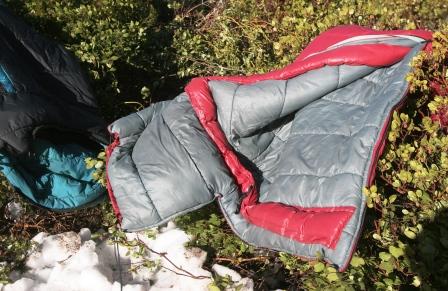 |
| These synthetic winter bags got slightly damp, but dried out quickly! |
Click here to read the story!
Subscribe to:
Posts (Atom)